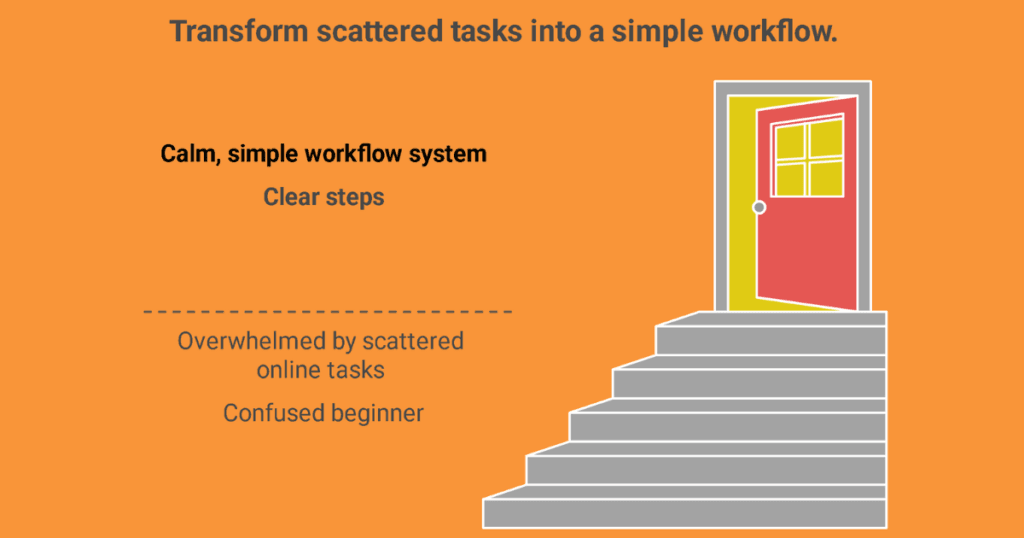
Running a small business often feels like you’re doing everything at once. You’re replying to
emails late at night, forgetting to follow up with leads, struggling to send newsletters
consistently, and losing potential customers simply because you don’t have time. On top of that,
creating email content feels overwhelming, and manual sending makes growth feel impossible.
If this sounds familiar, then email automation is one of the simplest ways to regain control of your work.
Who This Guide Is For
This guide is designed specifically for
- Small business owners who want consistent customer follow-ups without hiring extra staff
- Side hustlers who are trying to grow income while juggling a full-time job
- Beginners who want a simple, affordable way to start email marketing without tech stress
If you are looking for a system that works quietly handle all your email tasks in the background while you focus on your business,
Then you’re in the right place.
The Real Problem With Manual Email Marketing
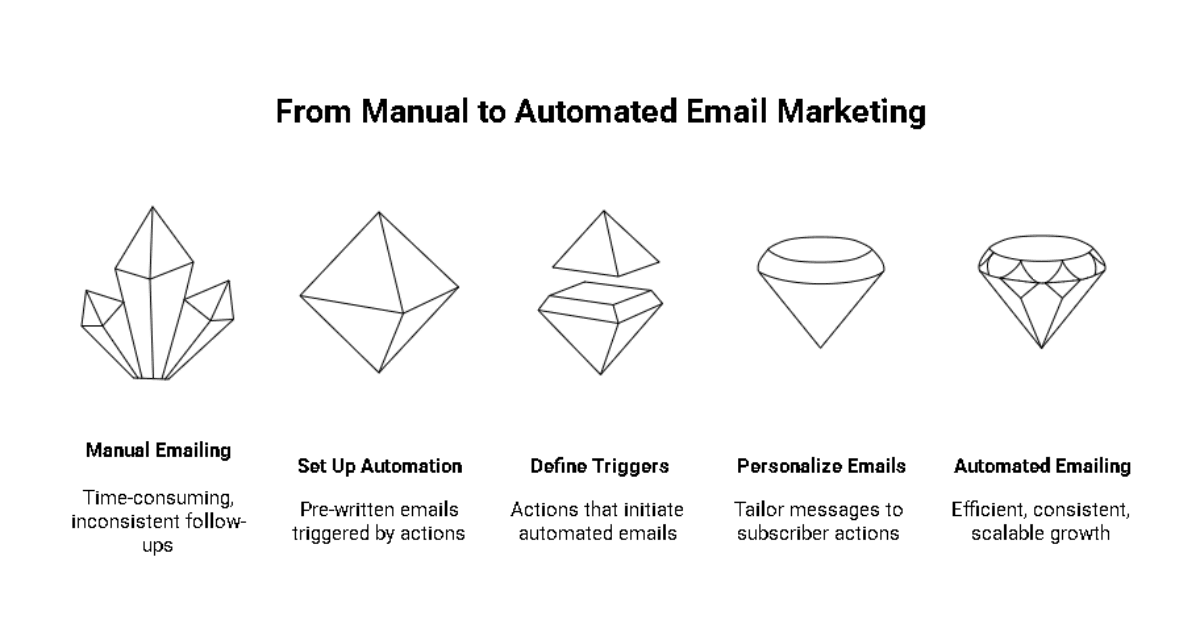
Most small businesses start email marketing manually. You write emails one by one, remember
to send follow-ups (or forget), and try to segment customers using spreadsheets. This approach
usually fails because:
- It takes too much time
- Follow-ups are inconsistent
- Leads go cold quickly
- Growth depends entirely on your availability
As your list grows, manual emailing becomes unsustainable. That’s where email automation
changes everything.
What Is Email Automation (In Simple Terms)?
Email automation means setting up pre-written emails that are automatically sent based on
actions your subscribers take.
Examples of Email Automation
Someone joins your list → they receive a welcome email
A customer buys → they get a thank-you email
A lead clicks a link → they receive a follow-up
Once set up, the system runs on autopilot.
Why Email Automation Is a Game-Changer for Small
Businesses
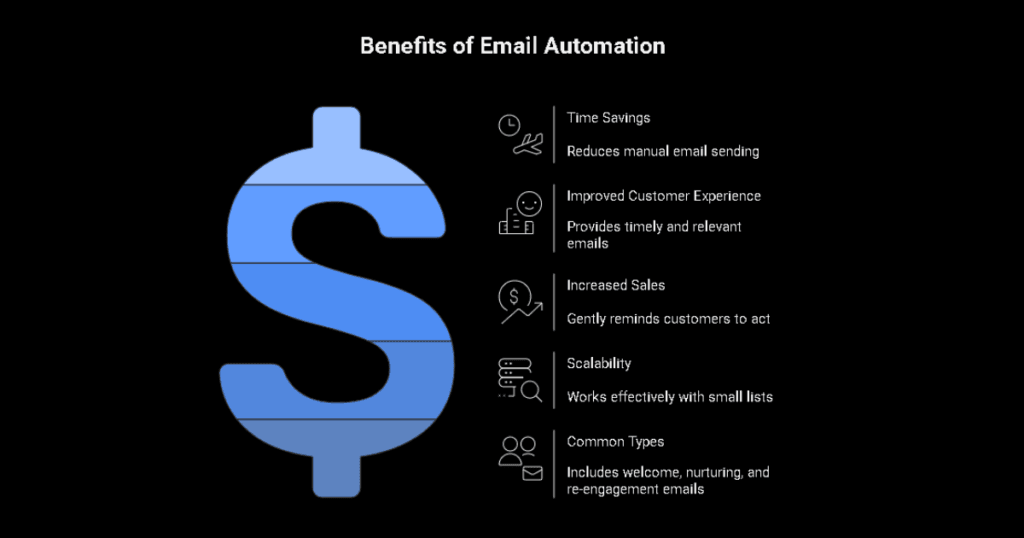
A. Saves Hours Each Week
You write emails once, and they keep working for you. No more daily manual sending.
B. Improves Customer Experience
People get timely, relevant emails instead of random broadcasts.
C. Increases Sales Without Pressure
Automated follow-ups gently remind people to take action without sounding pushy.
D. Works Even With Small Lists
You don’t need thousands of subscribers. Automation works beautifully with small, targeted
audiences.
Common Types of Email Automation for Small
Businesses
- Welcome email sequences
- Lead nurturing email campaigns
- Abandoned cart emails
- Re-engagement emails
These automations are widely used by small businesses and solo entrepreneurs.
You can Begin your automation journey by creating a free account here
The Best Email Automation Tool for Beginners
One beginner-friendly email automation tool is Moosend.
Moosend is popular among small businesses because it offers simple setup, drag-and-drop
automation workflows, and affordable pricing. No technical experience is required.
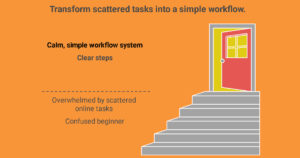
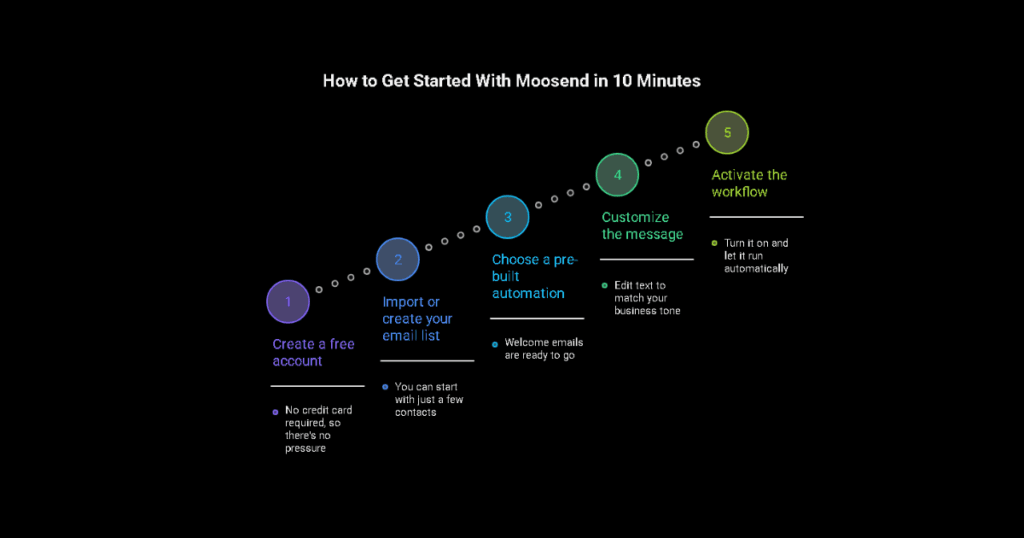
How to Set Up Email Automation in 10 Minutes
- Create a free Moosend account
- Import or create your email list
- Select a pre-built automation template
- Customize the email content
- Activate the automation
That’s it! Your emails will now be sent automatically—even while you sleep.
How Email Automation Fits Into a Simple Business
System
Email automation works best when combined with:
- A free lead magnet
- A clear offer or service
- Consistent website or social traffic
This creates a reliable system that nurtures leads automatically and generates predictable
results.
Ready to Automate Your Emails?
If you want to save time, follow up with leads automatically, and grow your small business faster,
Email automation is the best place to start.
Download the free 5-Day Hustle Starter Kit
and learn how to set up email automation for
small businesses in under 10 minutes.
Frequently Asked Questions About Email Automation
Most basic automations can be set up in under 10 minutes.
Yes. Many tools offer free or low-cost plans for small businesses.
Yes. Most email automation tools are designed for beginners and small businesses.
No. Email automation works best with smaller, targeted lists.